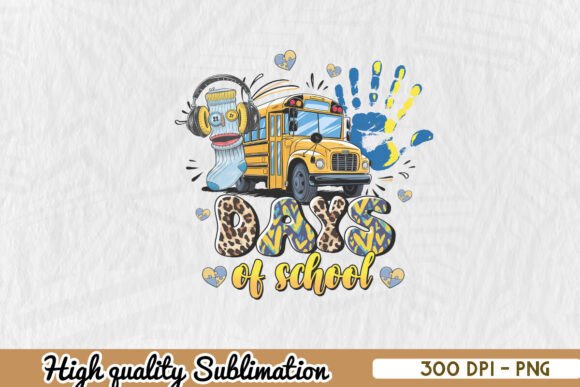
Reviewing the 100 Days of School Down Syndrome PNG Design
When a design file lands in my inbox, my first question is always: "Where does this belong?" I’m looking beyond the pixels on screen to the stitches on fabric, the final product in a customer’s hands, and the real-life context it will inhabit. The 100 Days of School Down Syndrome PNG presents a specific, heartfelt theme, and evaluating it for real embroidery work requires a practical eye.
A Design Built for Celebration and Connection
The first impression is one of joyful recognition. The theme taps into a significant milestone—the 100th day of school—while weaving in a message of inclusivity and celebration for Down Syndrome awareness. This isn’t a generic graphic; it carries a distinct personality meant for commemorative and supportive projects. The mood it creates is celebratory, warm, and deeply personal. As an embroidery designer, I see this not just as a pattern, but as a conversation starter stitched onto fabric.
The layout likely supports a clear, central message, which is excellent for embroidery. Visual complexity can be a nightmare for stitch translation, but a design focused on a strong, readable theme suggests an underlying structure that embroidery machines can handle well. This points towards its natural home: custom apparel, personalized gifts, and small shop merchandise where the meaning behind the product is as important as its craftsmanship.
The Real-World Embroidery Scenario: A Commemorative Tote Bag
Let’s walk through a typical use case. Imagine a client requests a custom tote bag for a teacher, celebrating her class’s 100th day and honoring a student with Down Syndrome. This PNG file becomes the core embroidery design asset. My immediate practical considerations are about translation from digital graphic to physical stitch.
How will the text elements—likely “100 Days of School” and “Down Syndrome”—render in satin stitch or fill stitch? Clear, bold lettering is key. The potential for dense stitch areas in decorative elements needs assessment; too dense, and the design becomes stiff on a bag meant for daily use. The shape and overall balance will determine the ideal hoop size. For a tote, a medium hoop is often perfect, allowing the design to be a focal point without overwhelming the bag’s structure.
Where This Design Excels in Embroidery Applications
Given its thematic strength, this design naturally fits projects where emotion and message are paramount. It would shine on:
- Baby clothes or nursery decor for a celebratory, inclusive message from day one.
- Embroidered patches for backpacks or jackets, creating a portable symbol of support.
- Pillow covers or blankets, transforming everyday home items into meaningful keepsakes.
- Sweatshirt embroidery or t-shirt designs for school events or awareness days.
- Aprons or kitchen towels as unique, heartfelt gifts for educators or family members.
- As a central motif for holiday gifts or wedding gifts within supportive communities.
- As a digital file for Etsy sellers or craft businesses to create cohesive lines of commemorative products.
The value here is in the specific connection it fosters. For a small business owner, this isn’t a mass-market design; it’s a niche product that builds tremendous customer trust and engagement because it speaks directly to a lived experience. The handmade presentation of embroidery adds a layer of care and permanence that elevates it beyond a simple printed transfer.
Practical Points for Careful Application
No design is universally perfect, and a professional review must highlight where caution is needed. With a themed design like this, certain applications require extra thought.
Using it on very small hoop sizes risks compromising detail clarity, especially if there’s small lettering. Textured fabrics like some towels or stretchy fabrics like standard t-shirts demand proper stabilizer to keep the message sharp. Embroidering on dark fabric backgrounds requires a thoughtful thread color palette for contrast—a step often overlooked when viewing a PNG on a white screen.
Applying it to curved surfaces like caps needs consideration for layout distortion. Similarly, any detailed corners or intricate decorative accents within the design should be tested to see if they translate cleanly into stitches without becoming fragile points. For products destined for frequent washing, such as baby items or apparel, stitch density and durability are paramount; a overly complex fill stitch area might not hold up as well over time.
How This Design Impacts Your Craft Business
From a commercial perspective, the 100 Days of School Down Syndrome PNG affects more than just the stitch quality. It influences your brand’s consistency if you specialize in supportive or commemorative crafts. It enhances the giftability and recognition of your products, making them stand out in a marketplace of generic goods. For digital product sellers, offering this as part of a graphics bundle for crafts can attract a dedicated customer base looking for meaningful design assets.
However, professionalism hinges on due diligence. The description mentions "high quality files," but as a reviewer, I must stress: always verify the specifics for embroidery. If this PNG is intended to be converted into an embroidery file, confirm the compatibility, stitch count estimation, and any provided license terms for commercial embroidery use before selling finished items. This protects your business and your customers.
Essential Designer Notes Before You Hoop It Up
Before I’d ever run this design for a client or my own shop, my process involves a few non-negotiable steps. I recommend every maker follow a similar path.
- Test on scrap fabric first. Use the same material you intend for the final project. This reveals how the details translate and how much stabilizer you need.
- Check thread color contrast meticulously. View the PNG in black and white mockups to judge value contrast, and physically compare thread swatches against both light and dark fabric backgrounds.
- Review the effective stitch density. Look for areas that might become too thick or stiff, especially for wearables like sweatshirts.
- Confirm your hoop size is appropriate for the design’s scale and the product’s dimensions. A tote bag panel differs greatly from a baby bib.
- Inspect small details after a test run. Are corners clean? Is lettering readable?
- Clarify the license. Is this for personal use only, or can it be used for small shop products and Etsy listings? Never assume.
Embroidery is the art of making digital intentions tangible. The 100 Days of School Down Syndrome PNG has a clear, heartfelt intention. By applying these practical judgments and preparatory steps, you can ensure that the final embroidered product—whether it’s a patch, a tote, or a gift blanket—honors that intention beautifully, creating a piece that’s not only well-crafted but deeply meaningful.